

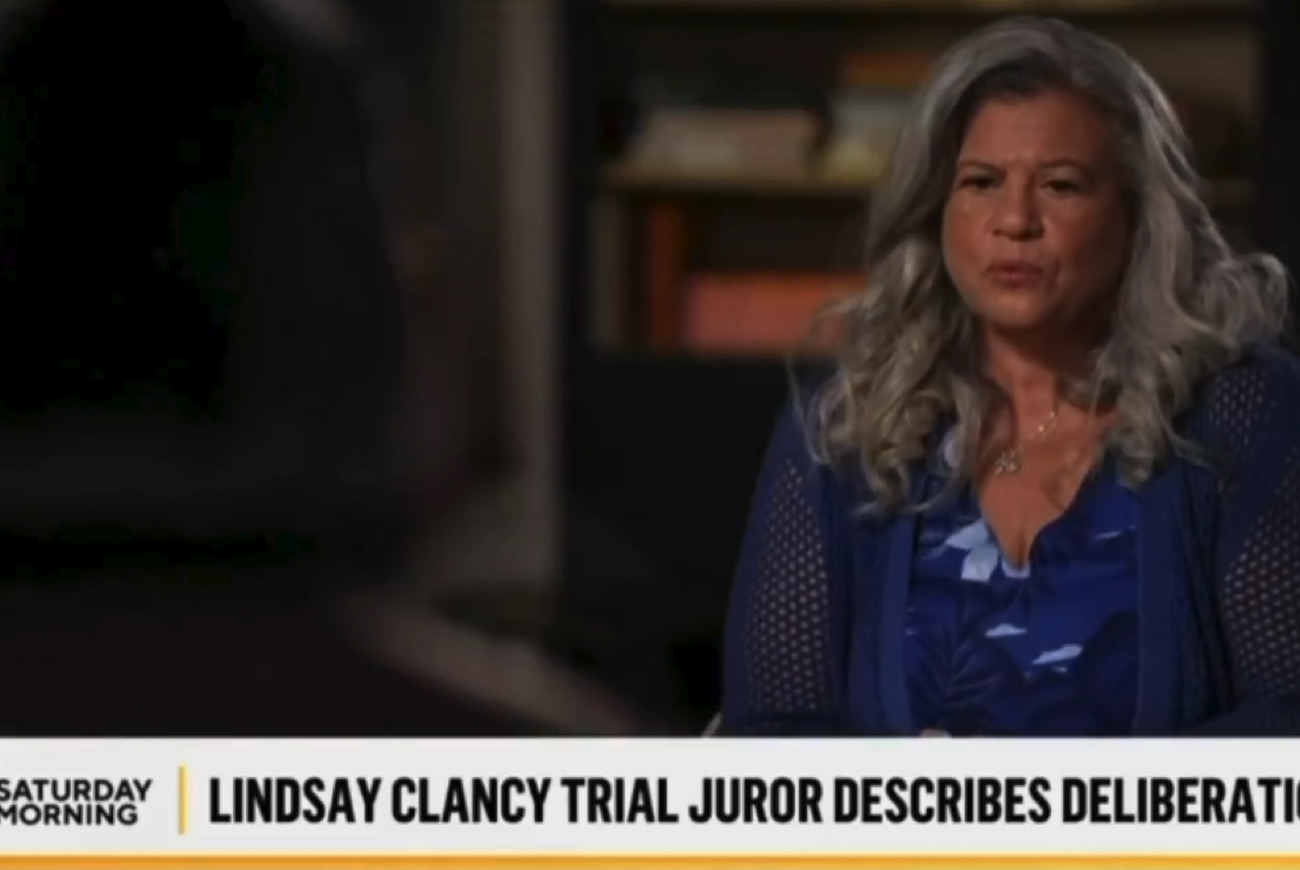
The legal fallout from the Lindsay Clancy mistrial is intensifying, with a juror’s recent comments drawing sharp criticism from legal experts.
In a weekend interview with CBS Saturday Morning, 65-year-old juror Paula Devlin revealed that the panel viewed the high-profile triple murder case as an opportunity to spark societal change. “Even though we didn’t know what was going on outside of our little bubble that we were in, we knew that this was a turning point, and this would be something that could change something to make it better for other women in the future, for other families,” Devlin said. “You know, justice for those children is this never happening again.”
According to Devlin, the jury was initially split—with eight members leaning toward finding Clancy not criminally responsible, two undecided, and two leaning toward a guilty verdict—before eventually shifting to an 11-1 split in favor of not criminally responsible.
However, legal analyst and trial attorney Neama Rahmani is slamming that mindset as “problematic.”
“Jurors are supposed to decide cases solely based on the facts of that case. In the Clancy case, they were to decide whether she was criminally responsible,” Rahmani told Fox News Digital. He emphasized that a jury’s duty is to apply the law as it stands, not to attempt to make law or consider the broader social impact of their verdict. “It is not appropriate for the jurors to consider the impact of their decision on other women, children or cases.”
Despite the controversy, Rahmani noted that there is little recourse at this stage. “Judge Sullivan already declared a mistrial and the law generally prohibits inquiry into juror deliberations,” he explained, noting that while exceptions exist for “outside influences,” it is currently unclear if Devlin’s comments reflect a broader juror bias or simply her personal interpretation of the case’s significance.
The mistrial was ultimately declared after the panel remained deadlocked at 11-1. Several jurors, along with defense attorney Kevin Reddington, have since claimed that the lone holdout failed to properly engage with his fellow jurors regarding the evidence he believed pointed toward guilt.