

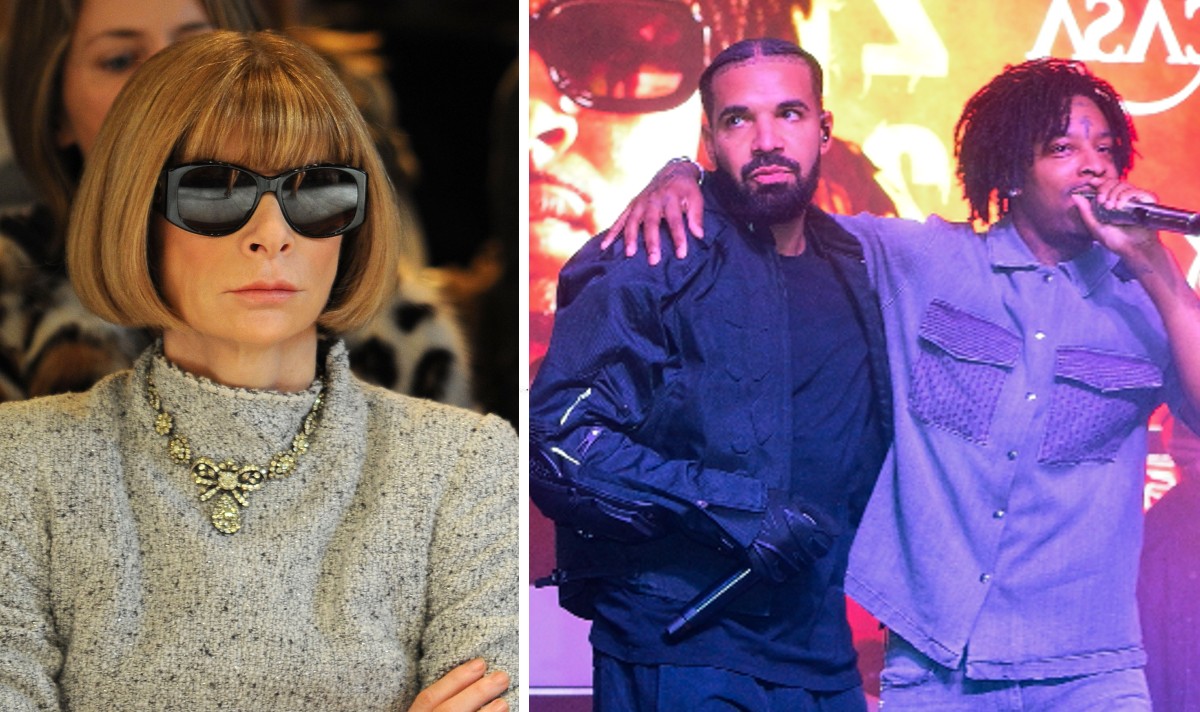
It looks as if Vogue isn’t stressing about whether they are going to win their lawsuit against Drake and 21 Savage because according to a new report, the magazine has a strong case that could see both rappers face millions in damages. As we previously reported, Vogue took legal action against Drizzy and 21 on Monday, claiming that the pair had not only created but also distributed a “counterfeit version of perhaps one of the most carefully curated covers in all of the publication business.”
It’s believed that the fake Vogue covers that began surfacing all over social media, were part of a marketing plan to help promote the pair’s joint album, “Her Loss,” which was released last week. But in their 30-page lawsuit, the magazine’s publisher Condé Nast argued that Drake and 21 Savage had violated the company’s trademark rights, and could now be facing a staggering amount in damages.
No way 21 Savage & Drake didn’t get permission first from Vogue so now they’re being sued💀
— King Wow (@wowthatshiphop) November 8, 2022
According to the NPR, Vogue has an “easy case” against both rappers, who they are seeking $4 million from in damages, or triple any profits from the fake Vogue issues, as well as profits from the album itself. Law professor Barton Beebe at the New York University told the publication, “It seems to me an interesting question would be if Vogue wants to pursue this all the way to damages because they could be in the millions for this kind of conduct.”
In Drake and 21 Savage’s defense, however, their legal team could argue that the magazine was clearly a spoof of the actual issues the magazine released on a month-to-month basis. Even looking at the pages inside their version of the mag, it’s rather obvious that Vogue had no involvement in putting their issue together, even though their likeness was still attached to the campaign.
Lmaoooo why are Drake and 21 Savage gettin sued for damages all they did was make a fake vogue cover
— ꜰʟᴀᴍᴇ (@LAxFLAME) November 8, 2022
“The basic idea of trademark infringement is that the plaintiff has to show likelihood of confusion,” Mark P. McKenna, who sis a law professor at UCLA, said. “And so, what you see some courts sometimes say is, if the parody is clear, then there’s not going to be any confusion because people will understand that it’s a parody.”
“There was a sort of calculated risk being made here. I mean, even if the court orders them to stop doing this, like they’ve already done it, they’ve gotten the attention. I think that’s why Vogue is trying to seek money: to make it painful enough for people so that they won’t do it.”