

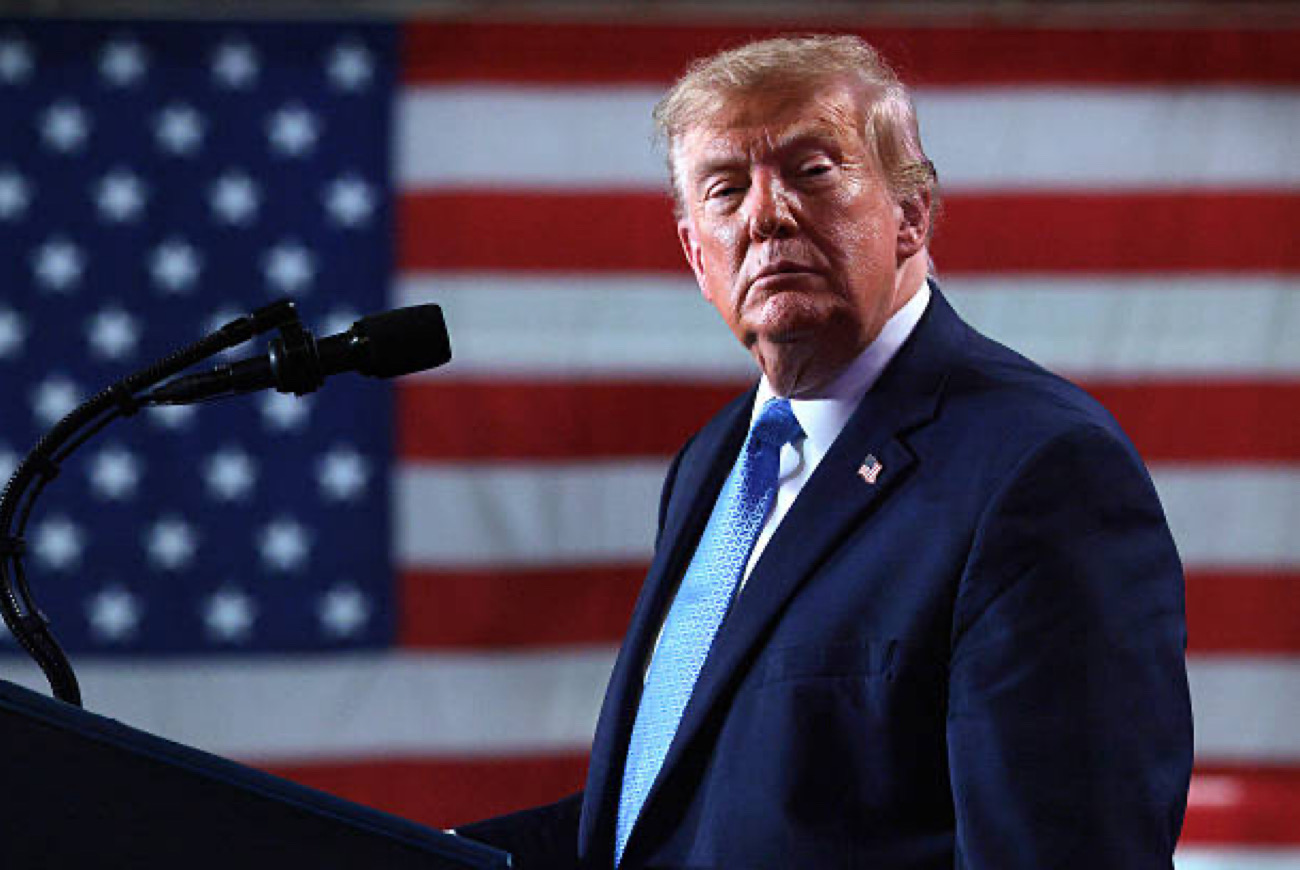
President Donald Trump has warned that he could become “Mr. Veto” if Democrats win control of Congress in this week’s midterm elections.
Speaking Monday on the New York Post’s Pod Force One podcast, Trump told host Miranda Devine that he remained hopeful Republicans could retain control of the House despite polling that suggests the GOP could suffer significant losses.
Trump said that if Democrats take control of both the House and Senate, he would likely respond by rejecting legislation sent to his desk. “I guess I’ll become Mr. Veto,” Trump said. “They’ll be sending stuff up. You veto it.”
He suggested that Democrats could eventually be forced to negotiate if their legislation was repeatedly blocked.
“And eventually, after a month or two of getting all vetoed—they’re just wasting time—they come over, and you make a deal,” Trump said. “I think that probably would happen, but hopefully we don’t have to worry about that.”
Trump’s comments come as Republicans face an increasingly difficult political environment heading into the elections. Polls cited in the report indicate that Democrats could gain enough seats to take control of Congress, potentially ending the GOP’s ability to advance Trump’s legislative agenda without Democratic support.
The White House has reportedly been preparing for that possibility for months. Administration officials have developed contingency plans focused on pursuing Trump’s priorities through executive action and other tools that do not require approval from Congress.
According to a White House official familiar with the planning, deputy chief of staff Stephen Miller and budget director Russell Vought are examining what Trump can legally do without new legislation. The official said they are also considering how far the administration could push presidential authority and how those actions might be defended in court.
RELATED: Donald Trump Rally Attendee Trolls Fox News Host
The strategy reflects the administration’s broader approach during Trump’s second term, which has relied heavily on executive orders and unilateral action. Congress has passed relatively few laws since the current session began in January 2025.
A Pew Research Center study cited in the report found that the 119th Congress had passed 121 laws, making it the second-least productive Congress in terms of legislation over the past four decades.
If Democrats take control of the House, they have promised to launch a series of investigations into the Trump administration and the president’s business affairs. Possible inquiries could focus on the Trump family’s finances, the administration’s handling of the war with Iran, and other executive actions.
Some prominent Democrats have also discussed the possibility of pursuing impeachment proceedings against Trump and Defense Secretary Pete Hegseth. Although impeachment would require action in the House, conviction and removal from office would still require a two-thirds vote in the Senate.
A Democratic-controlled Congress could also significantly complicate Trump’s ability to fill vacancies throughout the federal government. Senate Democrats would have the power to block the president’s judicial and executive-branch nominees, including any potential Supreme Court selections.
Democrats could also vote to end national emergencies Trump has declared to expand his authority to act without congressional approval. However, Trump could veto such legislation, meaning lawmakers would need a two-thirds majority in both chambers to override him.
That possibility would make the veto a central tool of Trump’s strategy if Democrats control Congress. Rather than allowing Democratic proposals to become law, Trump could reject them and force lawmakers to negotiate around his objections.
The president’s comments signal that a divided government could lead to an immediate political confrontation. Democrats are expected to pursue investigations and attempt to block parts of Trump’s agenda, while the White House appears prepared to rely on executive power and presidential vetoes.
Trump has not conceded that Republicans will lose either chamber. He told Devine that he remains optimistic about the GOP’s chances, even as public polling points toward potential Democratic gains.
If Democrats do take control, the president’s ability to sign major legislation would be sharply limited unless both parties reach agreements. His threat to “veto everything” suggests that negotiations could become the primary way for Congress to pass legislation during the remainder of his term.