

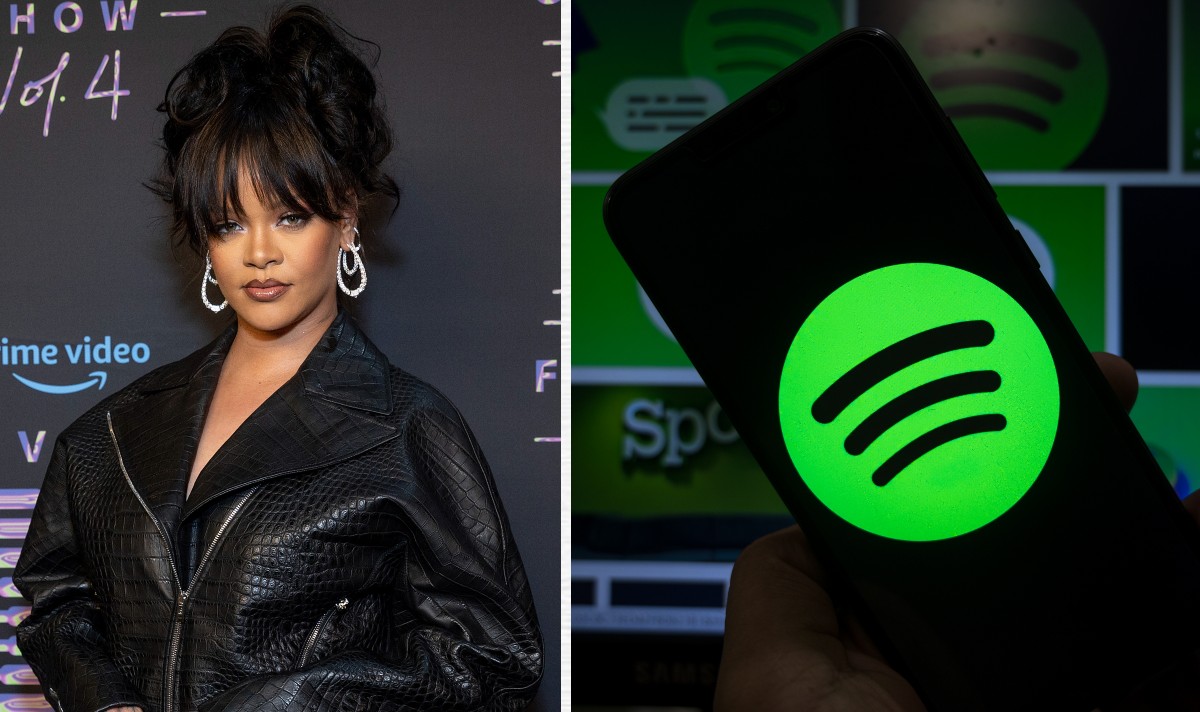
If you’re active on Twitter, you will more than likely have come across all of the AI-generated songs users have shared of their favorite artists singing to other people’s songs.
From Drake and Ariana Grande to Rihanna and Travis Scott, their voices can be heard on a variety of hit records with the use of artificial intelligence. Some of these AI covers have already generated millions of views already on social media.
They really made an A.I. cover of Rihanna singing Tems “Free mind.” Maybe A.I. will give us a new Rihanna album since she won’t? (Nah, I hope they don’t) pic.twitter.com/iAUauSxx5Q
— DJ R-Tistic (@DJRTistic) April 13, 2023
RELATED: Several Michael Jackson Songs Removed From Streaming Services Over Suspected ‘Fake’ Vocals
But according to reports, Universal Music Group is not happy about it. The music industry giant is said to have told streaming services such as Apple Music and Spotify to block any AI service from getting access to its extensive catalog to prevent AI developers from harvesting the melodies and lyrics of their artists.
Per the Financial Times, the company has become concerned with the growing use of artificial intelligence as developers are believed to be using tracks from streaming platforms to train the AI bot in producing music that’s identical to the actual artist’s voice.
A source described AI technology as a serious threat to the industry and record labels that don’t want their catalog exploited. UMG has reportedly sent out an email to streaming services, stating that they will not hesitate to take necessary steps to protect their rights and those of their artists if platforms such as Spotify don’t do something about this growing issue.
Before streaming services like Spotify and Apple Music, the music industry relied on physical sales of music, such as CDs and vinyl records.
However, with the rise of the internet, music piracy became rampant, leading to a decline in physical sales.
Streaming services like Spotify emerged as a solution to this problem. By providing a legal and affordable way to access music, streaming services quickly gained popularity among consumers.
Today, streaming is the primary way that people consume music, with services like Spotify boasting over 356 million active users as of Q1 2021.
Ariana Grande – Passion Fruit (AI Cover) pic.twitter.com/bJU1zfj2pO
— ً” (@thewayq) April 9, 2023
The use of AI in the music industry isn’t all bad though. For example, AI can help music streaming services like Spotify provide more personalized recommendations to their users. This can lead to increased user engagement and ultimately, increased revenue for the company.
AI can also be used in music creation and production. For example, AI can analyze a song’s lyrics and melody to identify the key and tempo, allowing producers to create backing tracks that fit seamlessly with the song.
AI can also be used to generate new melodies and chord progressions, providing inspiration to songwriters.
RELATED: Sony Music Releases Statement Upon Pulling R. Kelly Album ‘I Admit’ From Streaming Platforms
While the potential benefits of AI in the music industry are clear, there are also potential drawbacks. One concern is that AI-generated music may lack the emotional depth and creativity of music created by humans.
Another concern is that AI may lead to a homogenization of music, with all songs sounding the same. However, proponents of AI argue that it can actually lead to more diverse and innovative music, as AI can help identify new sounds and styles that may have been overlooked by humans.