

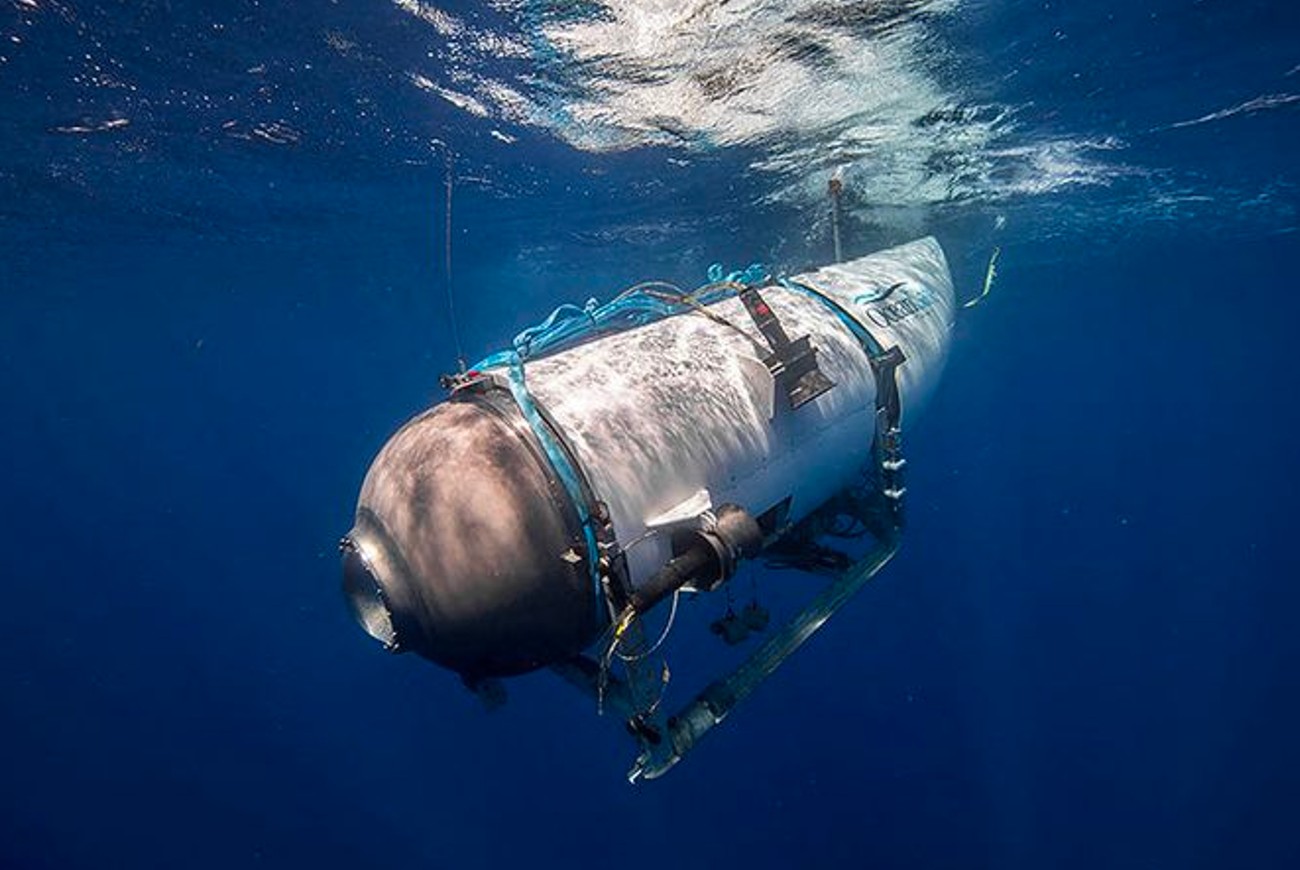
New details about the Titan submarine that went missing are emerging. According to the NY Post, OceanGate founder and CEO Stockton Rush reportedly hired college interns to build the electrical systems for the sub.
According to the report, Rush hired a group of students from Washington State University to work on the submarine. As we previously reported, a tourist submarine exploring the wreckage of the Titanic in the Atlantic Ocean went missing. On board were five individuals, including the notable British billionaire, Hamish Harding. Before the five passengers died, the US Coast Guard initiated a search operation, but the challenging conditions of the remote location and debris in the area made the search difficult. The expedition had a significant purpose – to document the deterioration of the Titanic, which has been slowly succumbing to metal-eating bacteria since its discovery in 1985.
After the US Coast Guard weren’t able to find the passengers, Oceangate released a statement saying “We now believe that our CEO Stockton Rush, Shahzada Dawood and his son Suleman Dawood, Hamish Harding, and Paul-Henri Nargeolet, have sadly been lost. These men were true explorers who shared a distinct spirit of adventure, and a deep passion for exploring and protecting the world’s oceans,” the statement continued. “Our hearts are with these five souls and every member of their families during this tragic time. We grieve the loss of life and joy they brought to everyone they knew.”
In more recent news, presumed human remains have been recovered from the wreckage of the Titan submersible. The US Coast Guard announced this heartbreaking discovery after the submersible imploded on its voyage to the Titanic earlier this month.
The remains, believed to be those of the five individuals who lost their lives in the implosion, will undergo analysis by medical professionals in the United States. While the cause of the implosion and the exact details of the incident are still under investigation, experts hope that analyzing the physical material and potential electronic data recovered from the wreckage will provide important clues about what happened. This discovery has shed light on the tragic fate of those aboard the submersible and has opened up new avenues of investigation into the design, safety standards, and lack of certification of such vessels.
The recovery of these presumed human remains has raised many questions about the events leading up to the implosion of the Titan submersible. The debris recovered from the mangled craft will play a crucial role in unraveling the mystery surrounding this tragedy. By carefully examining the physical material and any available electronic data, experts hope to gain valuable insights into what went wrong during this ill-fated voyage. The investigation is being led by the US Coast Guard, with support from transportation safety boards from both the United States and Canada, as well as the RCMP. Together, they will piece together a sequence of events and hypotheses to understand how the system failed.
The recovery of these human remains also highlights the inherent risks associated with deep-sea exploration and raises concerns about the safety standards and certification processes for submersibles like the Titan. As investigations continue, authorities will be looking closely at the design and construction of such vessels to determine whether any shortcomings contributed to this tragic incident.