Independent films often tout originality. Few arrive with ambitions as sweeping—or as singular—as Namaslay, the upcoming feature debut from filmmaking duo Rish and Kanish.
Set for an exclusive theatrical release on August 6th, 2026, Namaslay is not content to operate within the conventional boundaries of horror or thriller filmmaking. Instead, the film blends genres to confront one of America’s most commercialized cultural exports: modern yoga.
At the center of the story is Gayatri, a young woman who moves to Los Angeles carrying memories of the Yoga her grandmother taught her back home—a practice rooted equally in spirituality, philosophy, and physical discipline (which the filmmakers encapsulate as Yoga with a capital Y). When Gayatri receives an invitation to one of the city’s elite yoga studios, the opportunity initially appears glamorous, even welcoming. But beneath the polished wellness branding, something deeply sinister begins to emerge.
For Rish and Kanish, however, the origins of Namaslay were vivid, and grounded in real life experience.
The film emerged from years of firsthand encounters with what the directors describe as the “yoga-industrial complex.” Their mother, who practiced and taught Yoga with equal emphasis on its philosophical, spiritual, and physical dimensions, found herself pressured to dilute those teachings for Western audiences. Their father, meanwhile, was once turned away from a Bay Area yoga studio for wearing basketball shorts instead of branded athleisure attire. Later, while recovering from a shoulder injury, Kanish turned to yoga himself, only to encounter online spaces that often reduced the practice to aesthetic spectacle while ignoring its cultural roots entirely.
“We have a sharp message about the way Yoga has been cheapened in the west, by absurd price points, unrealistic physical standards, and of course, over-the-counter racism. For us, film is the best medium through which to speak. It allows audiences not only to hear what we have to say, but to feel it,” the directors explain.
That cutting philosophy slices through every layer of Namaslay, including the title itself. “Namaslay”—a phrase popularized in Western wellness culture as a cheeky riff on “Namaste”—becomes, in the filmmakers’ hands, both satire and warning.
A Masala Film for Modern Audiences
Rish and Kanish describe the tone of Namaslay as “masala,” the Indian cinematic tradition of blending multiple genres into a single emotionally maximalist experience.
Comedy collides with horror. Suspense bleeds into musical mayhem. Action erupts alongside family drama. At times, the film even adopts the propulsion of a sports movie—with yoga, naturally, functioning as the sport.
As a masala film*, Namaslay* deftly balances Indian and American genre textures. The filmmakers cite the anti-establishment fire of Salim–Javed classics like Deewaar and Sholay alongside modern horror touchstones such as Get Out and The Sixth Sense.
And beneath the spectacle lies an intimate emotional core.
Gayatri, the film’s protagonist, is a person who stutters. Rather than reducing her to a single identity, the film explores how race, disability, gender, and culture intersect unpredictably to shape the ways we move through the world. No one person is only one thing, and Namaslay illustrates our complexity by painting layered portraits of every character.
The filmmakers note: “Nowadays, Hollywood filmmakers are deathly afraid of putting anything truly substantive into their films. But the best films can deliver an intelligent message and a satisfying story; it’s really not that hard. Namaslay will do both.”
Building an Independent Epic
Despite operating independently with a reported budget of only $2.5 million, the filmmakers maximized every dollar, achieving an aesthetic on par with the scale of a tentpole blockbuster. Elaborate visual effects, large-scale set-pieces, an orchestral score, heartstopping pyrotechnics, intricate Steadicam work, and immersive sound design are all central to the film’s identity.
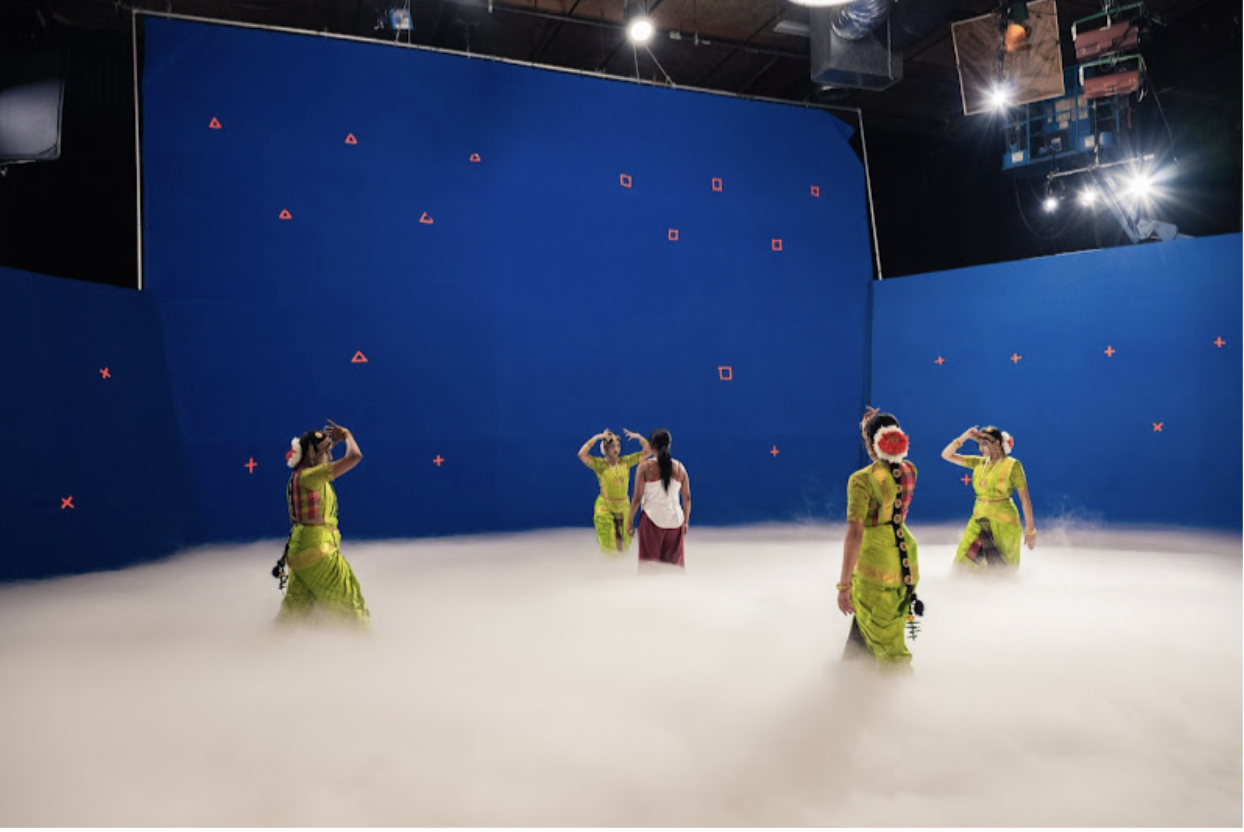
One particularly demanding sequence combined blue-screen environments with Bharatanatyam (South Indian classical dance) choreography under severe time constraints. According to the directors, the race against time ultimately improved the film, forcing them to pack more storytelling moments into fewer, more intricate shots.
“It’s doubly dispiriting to walk out of a movie that is self-evidently mindless and then discover that it cost over $200 million. To light that much money on fire is an insult to audiences everywhere. Nowadays, it happens every week.”
Through their company Junghal Studios, Rish and Kanish have positioned Namaslay as a fully independent theatrical release, created without the interference of any major studio. Their goal was not merely to complete the film, but to preserve its sharp-elbowed attitude from script to screen.
“Big studios are too scared and too bloated to do what we’ve done,” the directors assert. “Audiences today deserve films and filmmakers that respect the craft. Their ticket purchases are an investment not only of money, but of time. It’s on us to make sure they feel that, at the end of the movie, both were well-spent.”
Early viewers, according to the duo, have responded viscerally. The filmmakers’ favorite reaction is hearing audiences describe the film as an experience that “can only be described as itself.” For Rish and Kanish, Namaslay represents the beginning of something larger: proof that independent cinema can marry spectacle and story with an elegance major studios simply cannot replicate.
When Namaslay arrives exclusively in theaters on August 6, 2026, the filmmakers proclaim: “audiences will be treated to a real movie, at last. A movie that is worthy of their time.”