

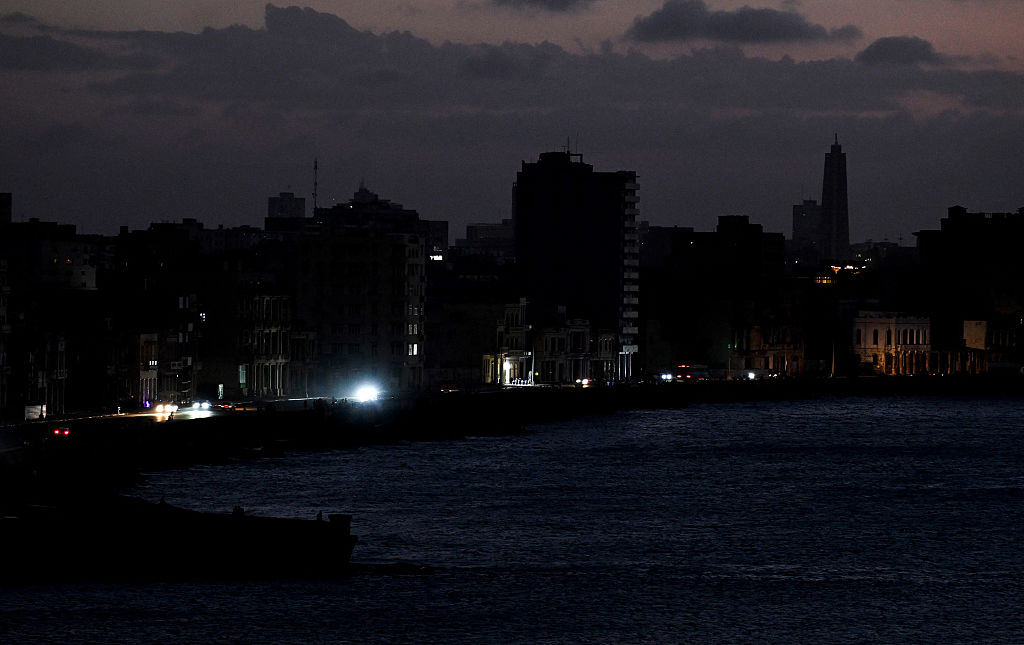
Cuba experienced an island-wide blackout on Monday, leaving millions without electricity as officials pointed to an ongoing U.S. energy blockade as a major factor behind the crisis.
According to CBS News, Cuban President Miguel Díaz-Canel said the country has not received oil shipments in more than three months. As a result, the island has been forced to operate on limited energy sources, including solar power, natural gas, and aging thermoelectric plants.
The blackout comes amid escalating tensions between Cuba and the United States following warnings from President Trump about tariffs on countries that sell or provide oil to the island nation. Officials say the lack of oil has strained the national grid beyond its limits.
Oil Shipments Halted As Tensions Escalate
Cuba relies heavily on foreign oil shipments to power its electrical grid. Historically, allies such as Mexico and Russia have provided assistance. However, officials say oil shipments have slowed or stopped entirely in recent months.
Díaz-Canel stated that the country has been operating under severe fuel shortages. The government has reportedly postponed thousands of surgeries due to limited electricity in hospitals.
The energy crisis deepened after U.S. policy shifts earlier this year. Cuban officials have blamed what they describe as a U.S. “energy blockade” for deterring other countries from supplying oil to the island.
Reports indicate that since U.S. actions targeting Venezuela in January, oil shipments that previously helped stabilize Cuba’s grid have been halted.
Hospitals, Transportation, and Daily Life Impacted
The blackout has disrupted daily life across the island.
Electricity powers hospitals, water systems, refrigeration, public transportation, and communication networks. When it disappears, the impact spreads quickly.
Officials confirmed that medical procedures were postponed because facilities could not operate at full capacity. Food storage and supply chains have also been affected.
Cuba has invested in renewable energy in recent years. However, solar and natural gas capacity remain insufficient to sustain the entire country during prolonged fuel shortages.